specht and sohne
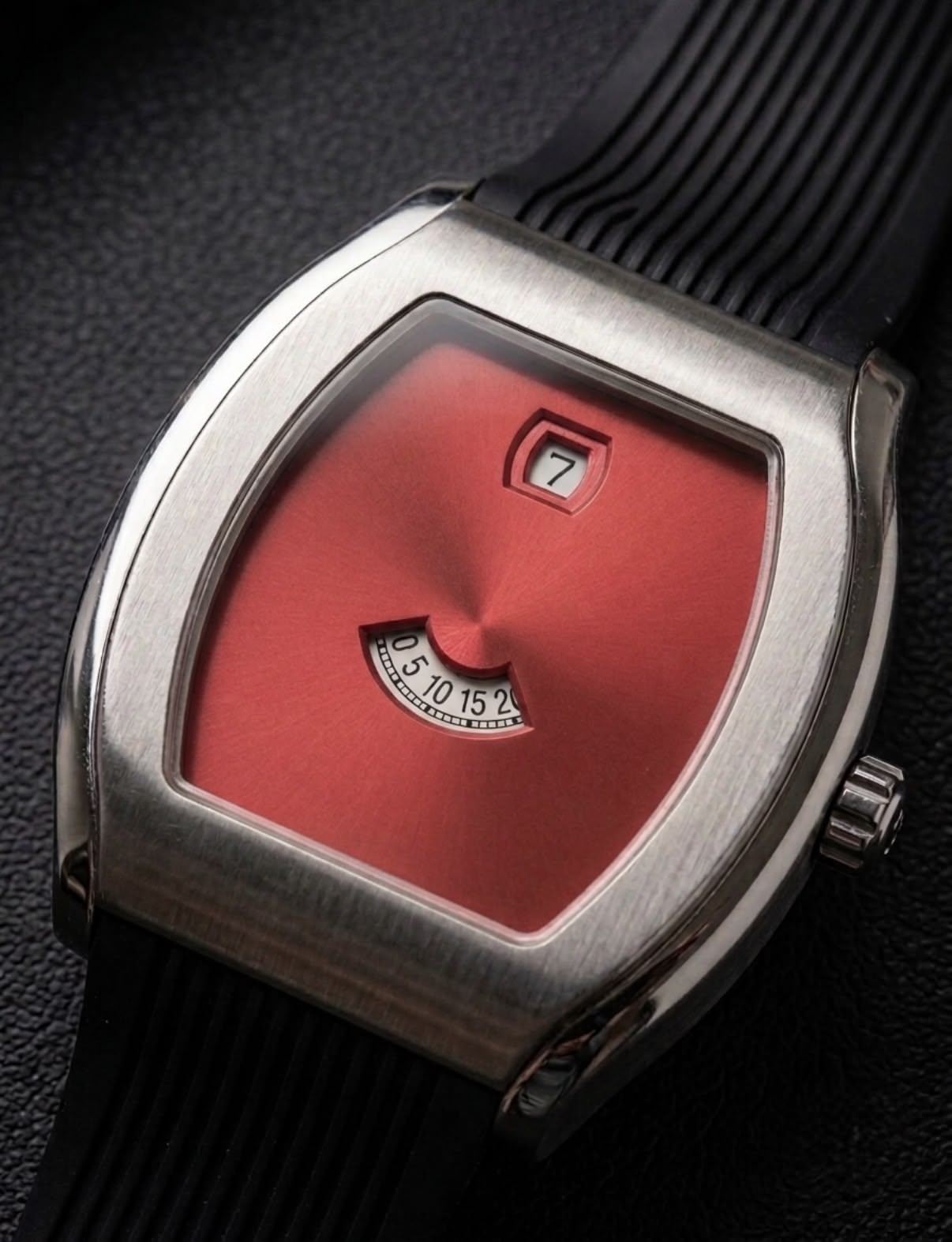
Specht and Sohne | Red Dial
My first ever Jumping Hour.
- Movement
- Sea-Gull
- Current Market Value
- $140
- Year
- 2026
- Case
- Steel
- Gender
- Men / Unisex
From Instagram
This watch started it all.
My obsession with the jumping hour complication actually began when I saw the Nicolas And Wonderhorst x MAEN Watches Grand Tonneau collaboration.
By the time I found it, the order window was closed and it was entirely sold out. Determined to experience that striking dial layout, I picked up this interpretation by Specht & Sohne.
At their mechanical core, they actually share the exact same foundation — the automatic Seagull ST1721 jump hour movement. Of course, Nico and MAEN didn't just drop it in raw; they did their own in-house modifications, custom decoration, and put each piece through a strict two-week testing process to hit their premium specifications.
For an out-of-the-box alternative though, this Specht & Sohne version punches way above its weight class.
I didn't know it at the time, but this angled red dial was the ultimate gateway drug. One watch quickly turned into a deep dive down the rabbit hole. Fast forward to today, and my collection stands at around 100 jumping hour pieces — mostly forgotten brands from the space-age 1970s, alongside a few modern interpretations.
If you've ever wondered why the numbers inside these windows are so tiny and require a bit of a squint to read, it's actually a fascinating mix of design and physics. To fit all 12 hours on a flat disc inside a compact 28mm movement, the font size is strictly limited by geometry.
Plus, keeping the disc miniature and lightweight is crucial — if it were any larger or heavier, the movement wouldn't have enough torque to instantly snap the hour disc forward in a fraction of a second without draining the power reserve or breaking the delicate gears. It's a brutal engineering tradeoff, but it preserves that classic, minimalist guilloché aesthetic.