7 August 2026
What Makes a Jumping Hour Watch Desirable?
Brand names and rarity are only part of the story.
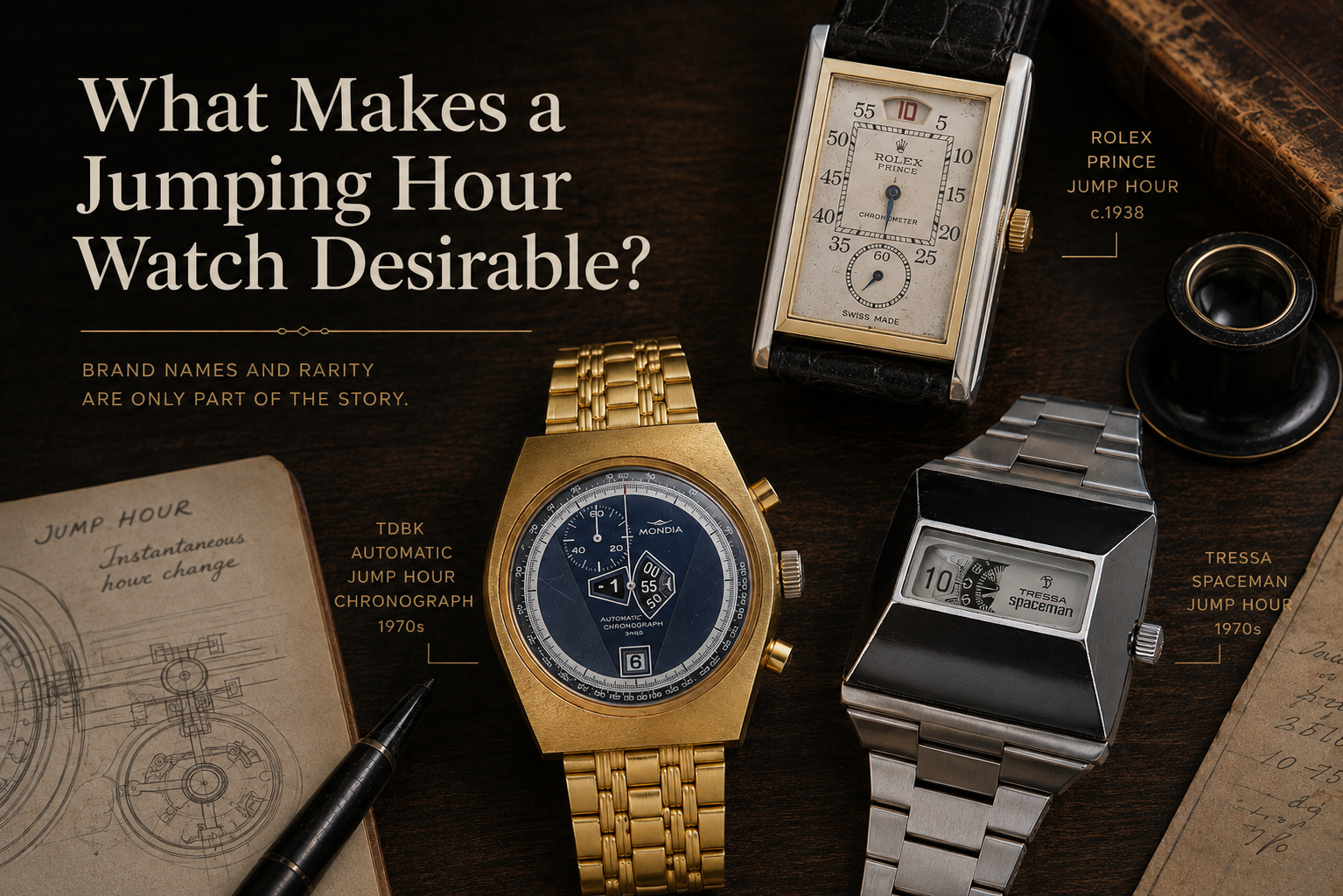
One of the questions I get asked most often is why one jumping hour watch is worth around $1,500 while another can sell for well over $100,000. At first, the answer seems obvious. It must be the brand, or perhaps simply rarity. After years of collecting, I've come to believe the answer is much more interesting. Rarity is only the starting point. Take two watches I know well: the Spaceman and the TDBK automatic jumping hour chronograph.
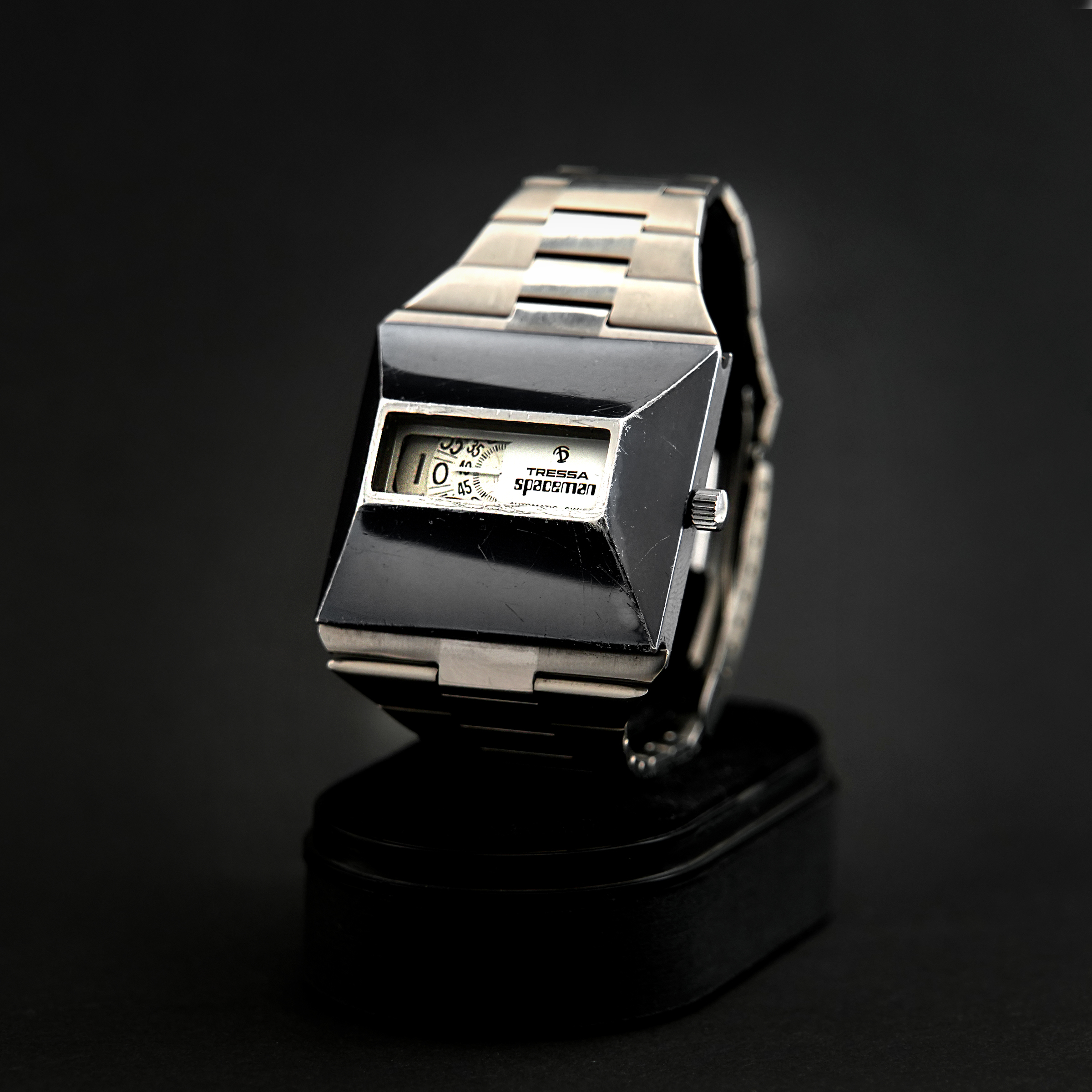
Both were sold under numerous Swiss brand names during the 1960s and 1970s, and both can be remarkably difficult to find today. I own two Tressa Spacemans and four Mondia examples of the TDBK, so I know from experience how long the search can take. Yet despite their scarcity, excellent examples generally remain in the low thousands of dollars.
Now compare that with the Rolex Prince Jump Hour.
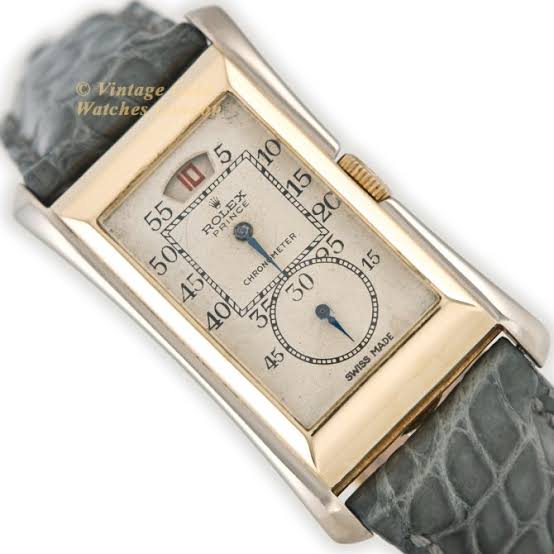
Rolex is arguably the most recognizable name in watchmaking today, and the Prince is a genuinely rare model from the late 1930s. Interestingly, Rolex had not yet become the global luxury powerhouse we know today when the Prince was produced. Much of the brand's prestige was built in the decades that followed. Even so, today's Rolex name undoubtedly adds to the watch's desirability. Yet a rare Rolex Prince Jump Hour still sells for far less than the most celebrated vintage jumping hour watches from Patek Philippe, Cartier or Audemars Piguet. That comparison says a lot about how collectors think. Brand and rarity both matter, but neither is enough on its own. One change I've noticed over the years is that collectors have started paying much closer attention to the people behind a watch. A respected watchmaker or designer can sometimes influence desirability almost as much as the name on the dial. Daniel Roth is a perfect example. So is François-Paul Journe, whose early work on the Chaumet Pléiade Jump Hour has made that watch highly sought after. The same applies to Gérald Genta. While some of his quartz watches remain relatively affordable, his most important designs have become some of the most collectible watches in the world. In each case, collectors are rewarding the creator as much as the brand. Technical quality also plays an important role. The finest vintage jumping hour watches were often built to a much higher standard, with better movements, superior finishing and greater attention to detail. Add historical importance, originality, provenance and strong collector demand, and you have the ingredients that create exceptional value. The longer I collect, the less interested I become in asking how rare a watch is. I'm much more interested in understanding why collectors value it. Sometimes the answer is the manufacturer. Sometimes it's the watchmaker, the designer or the movement itself. Sometimes it's the role the watch played in the history of the complication. Those are the watches that keep me searching. Collector's Note The comments about the Spaceman and the TDBK automatic jumping hour chronograph are based on my own collecting experience, having owned multiple examples of both models. The pricing observations reflect long-term market observation and discussions with other collectors, including Ruud, rather than fixed market values. References • Phillips Auctions, Chaumet Pléiade Jump Hour auction result, highlighting the early François-Paul Journe connection. • Phillips, Christie's and Monaco Legend Auctions, auction archives for vintage jumping hour watches by Patek Philippe, Cartier and Audemars Piguet. • Contemporary Chrono24 dealer listings for the Rolex Prince Jump Hour. Asking prices are used only as an indication of the current market and should not be interpreted as realized sale prices.
Older comments
- GNGuy NevoAuthor
Exploring the vast price disparity in jumping hour watches reveals that historical significance often carries more weight than mere scarcity. I would love to hear your thoughts on whether mechanical complexity or the specific era of manufacture dictates value for you.
7 August 2026 - SRSebastián Rivas
Great article! The jumping hour complication is such an underrated feat of engineering.
7 August 2026Pierre Marchand@Sebastián Indeed, the instantaneous snap of the disc requires such precise energy storage that it really separates the hobbyist pieces from the true masterworks.
7 August 2026Theo Lambert@Sebastián Indeed!
7 August 2026HVHenrik Voss@Pierre The art of the snap...
7 August 2026 - Oliver Hartmann
It is interesting you mentioned the TDBK; those movements were notoriously finicky despite their unique aesthetic appeal.
7 August 2026DODaniel Okafor@Oliver I agree, the vintage modules often suffer from excessive friction, which is likely why modern iterations using higher-quality materials command such high premiums.
7 August 2026 - LGLucien Garraud
For me, the desirability is tied entirely to the dial layout. The simplicity of a single window can be either minimalist genius or boring depending on the typography.
7 August 2026 - Kenji Watanabe
I have always felt that the brand name is just a safety net for collectors who don't understand the movement architecture behind the jump.
7 August 2026 - APAleksandr Petrov
Thanks for highlighting the Spaceman! It remains one of the most eccentric designs in horological history, regardless of its accessible price point.
7 August 2026 - SOsoaked.bid0s
That's awesome
7 August 2026 - ENEyal Nevo
It’s an entire world I wasn’t aware of. Great combination of futuristic aspirations and the constraints of technology at the time. And the revival of this genre makes this whole thing interesting
7 August 2026 - דבדידי ברק
Great
8 August 2026