13 August 2026
The Same Watch, Different Name
It's (not always) in the name.
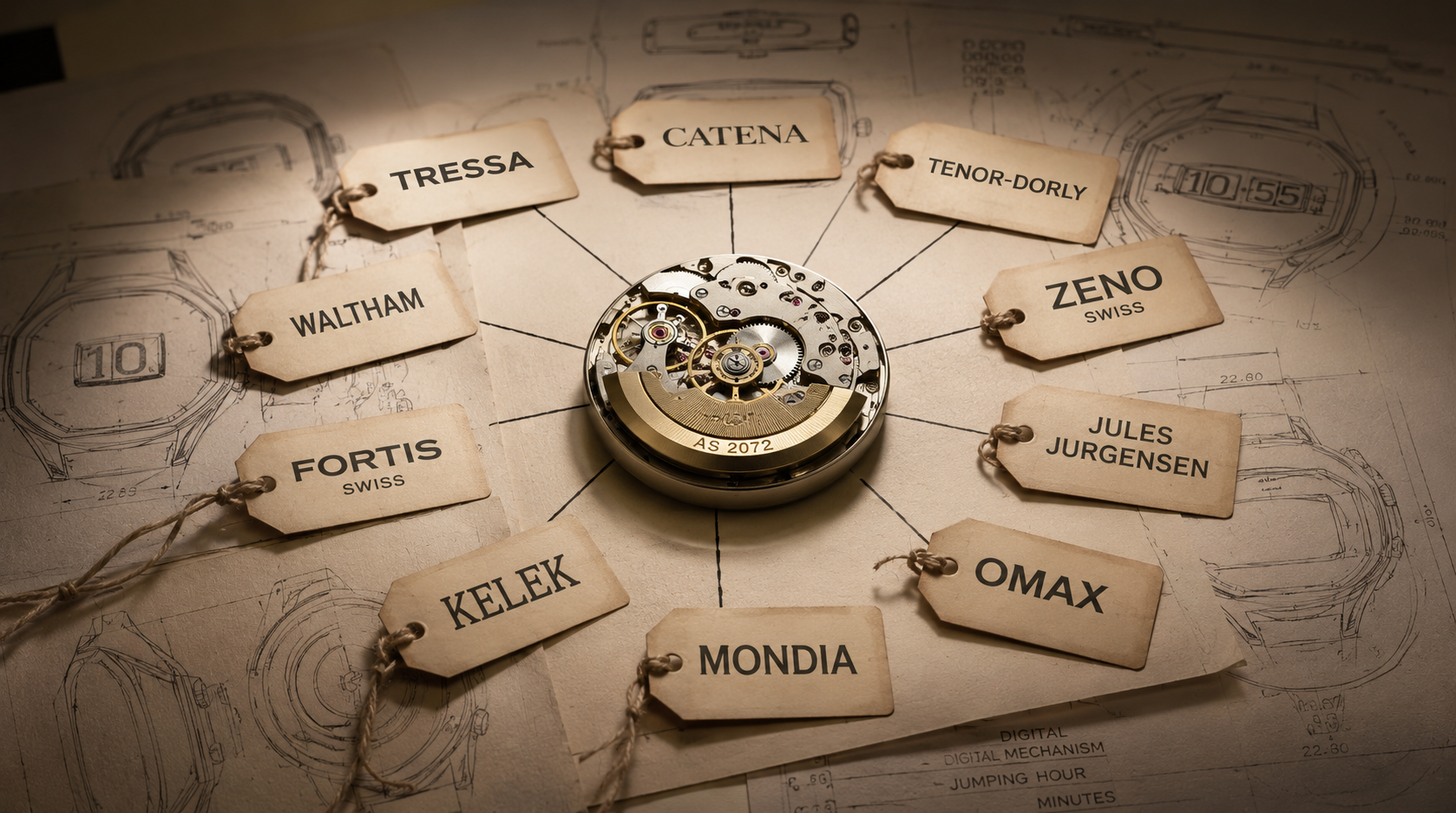
One of the things I find interesting about collecting 1970s jumping hours is how often familiar movements, designs and even complete watches appear under completely different names.
But there is an important distinction to make. Using the same movement doesn't make two watches the same.
I have three good examples in my own collection. My Tressa Spaceman jumping hours, my Tressa Saltomatic and a Tenor-Dorly are all powered by the A. Schild AS 2072. I have opened the Tenor-Dorly myself, so there is no mystery about the movement inside it.
Yet nobody would mistake these three for the same watch. Their cases, dials and displays are completely different. They simply share the same mechanical base.
Then it gets more interesting.
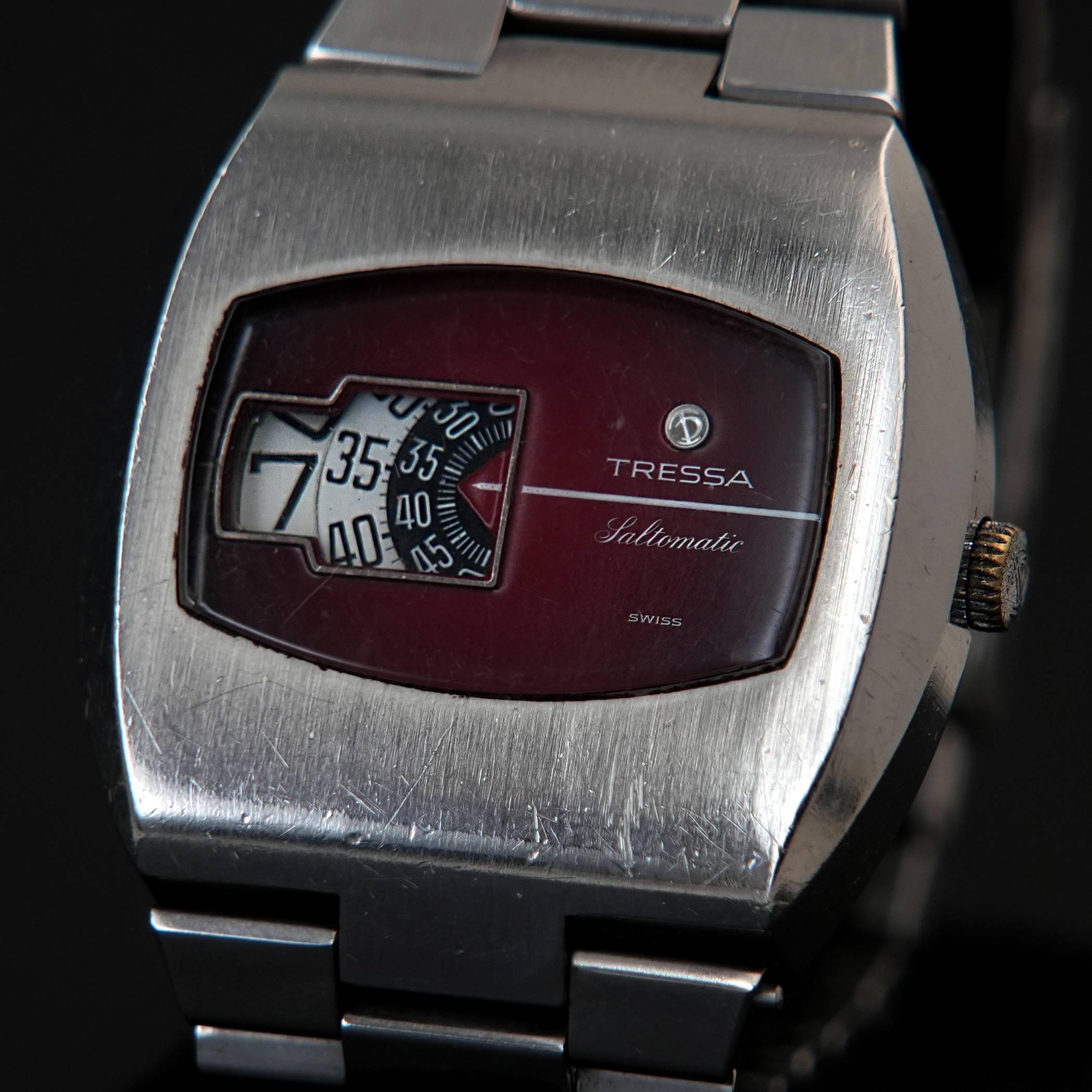
The Tressa Saltomatic has several close relatives carrying other brand names that look remarkably similar. This wasn't unusual in the Swiss watch industry of the period. Movement manufacturers supplied ébauches, while cases, dials and other components could come from specialist suppliers. The company whose name appeared on the dial was not necessarily responsible for everything underneath it.
The Spaceman takes this idea further.
André Le Marquand designed the original Spaceman for Catena, and versions of the design subsequently appeared under numerous names, including Tressa Lux, Fortis, Zeno, Jules Jurgensen, Octo, Omax, Vialux and Harlem. These weren't simply unrelated watches that happened to use the same movement. They belonged to the same recognizable design family.
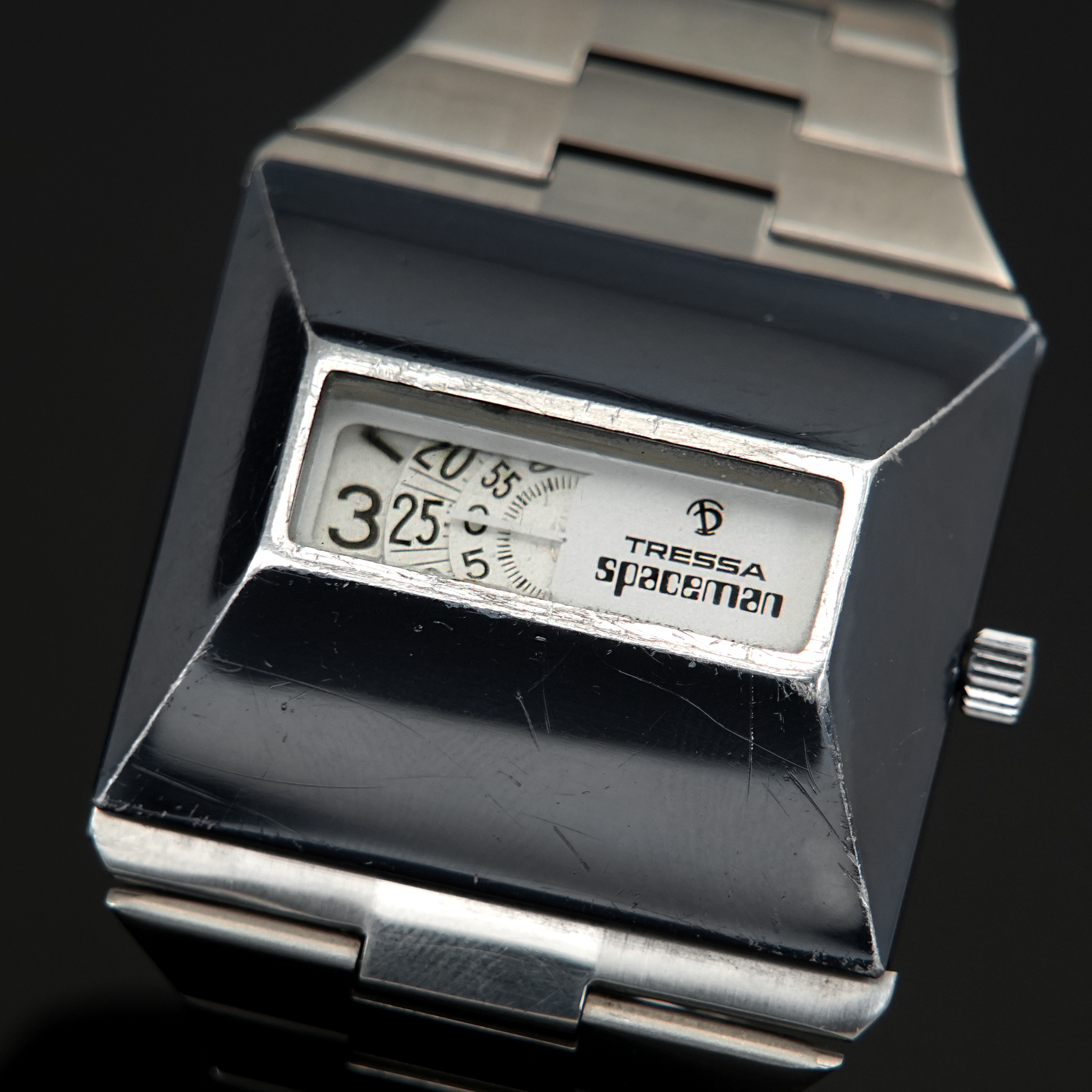
The jumping-hour version is much less common than the broader Spaceman family. My Tressa jumping-hour examples use the AS 2072, although I haven't found reliable documentation proving that every jumping-hour Spaceman used that caliber, so I prefer not to make that claim.
There is another good example in my collection.
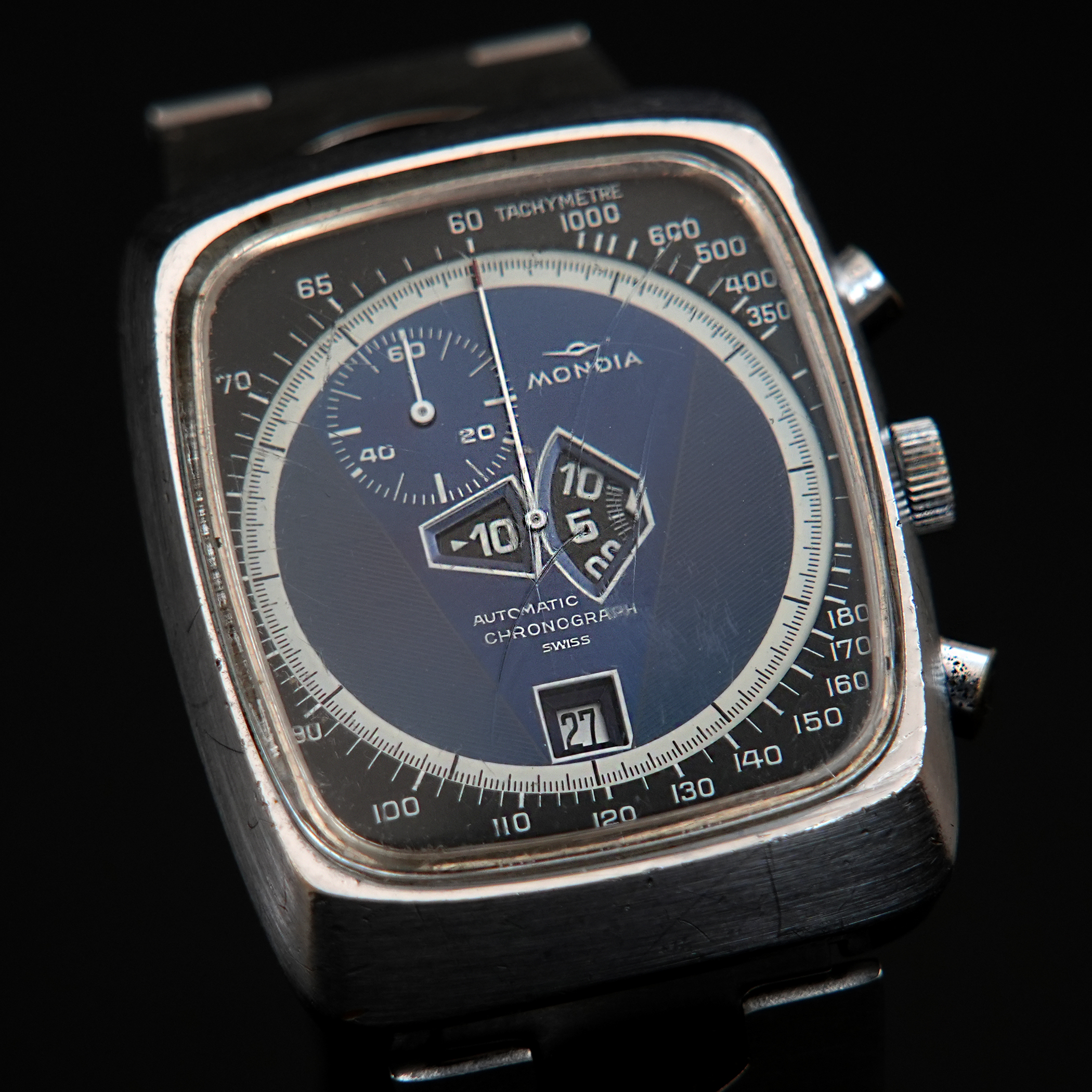
I own four Mondia automatic jumping-hour chronographs powered by the TDBK 1376. The initials refer to the companies involved in its development: Tenor-Dorly, Dubois-Dépraz, Brac and Kelek. The result combined an automatic movement, mechanical digital time display and chronograph.
Again, Mondia wasn't alone. The same TDBK 1376 appears in watches carrying other names, with examples known under Waltham, Tenor-Dorly, Kelek, Sandoz, Elgin and Precimax, among others.
This is where collecting obscure Swiss watches becomes a little like detective work.
Two watches can look completely different but share the same movement. Two others can look almost identical while carrying different names. And sometimes essentially the same watch was offered by a whole collection of brands.
So when I find an unfamiliar name on a 1970s jumping hour, I don't dismiss it.
I start looking for its brothers.
Sources
Fratello Watches André Le Marquand's Timeless Spaceman Audacieuse
Peter Doensen Watch: History of the Modern Wrist Watch
The Watch Spot Nivada Chronograph, TDBK Cal. 1369 Technical history of the TDBK 1369 and 1376 family
Hodinkee They Made Some Pretty Terrible Watches In The Good Old Days Too
Watchismo 1974 Waltham Jump Hour Chronograph
Older comments
 Guy NevoAuthor
Welcome to the discussion. I'd love to hear your thoughts on this piece — share your perspective below.
13 August 2026- Marcus Bellini
I learned this lesson the hard way. Passed on a Harlem-branded Spaceman years ago because I didn't recognize the name. Only later realized what it was. Now I never dismiss an unfamiliar dial without a little research first.
13 August 2026 - DODaniel Okafor
The TDBK 1376 deserves its own article. An automatic jumping-hour chronograph in the 1970s was genuinely ambitious engineering, and the fact that it surfaced under Waltham and Kelek too shows how fluid the industry was. Fascinating family of watches.
13 August 2026 - Sofia Rinaldi
Le Marquand's Spaceman is one of the great unsung design stories. That helmet-visor silhouette could only have come from late-60s space-age optimism, and yet it stayed relevant across so many marques. Design that good transcends the name on the dial.
13 August 2026APAleksandr Petrov@Sofia Completely agree. And the jumping-hour variant being the rarer one makes it even more special — you're holding a less common chapter of that design story.
13 August 2026 - Pierre Marchand
This is exactly why I keep a folder of movement calibers on my phone. You spot an unfamiliar name at a flea market, check the caseback, and suddenly a 'nobody' brand reveals itself as part of a real family. Half the fun is the detective work.
13 August 2026Theo Lambert@Pierre The caliber folder is a great idea. I've started doing the same with case shapes — so many shared cases across brands that you can ID a watch from across a table before you even read the dial.
13 August 2026 - HVHenrik Voss
The ébauche era is so misunderstood today. People hear 'shared movement' and assume laziness, but it was a genuine ecosystem — specialists doing what they did best. The AS 2072 is a perfect example of a workhorse that gave dozens of brands a reliable base.
13 August 2026